
Why am I here, doing UX?
I own a small UX agency in 2026. I ask myself: What’s the point?

Specifically, if AI can “do it all,” why am I still working so hard? Why do I do design work with clients, mentor industry professionals, and teach? And more importantly—why do they pay me?
In the beginning, I got into UX because the hiring manager talked me into it, after I had been a high school science teacher. “You’ll be great at it,” Pete Kelly told me (I’m paraphrasing from memory), “because you already know how to explain complex, abstract concepts to teenagers. And here, there’s not even a test at the end.”
The goal in those days (2010) was to make it so nobody using the Xbox console needed to ask for help. If we did our jobs well, then the words on the screens would be so obvious, so easy to understand, that a nine-year-old could open their new Xbox on Christmas morning and set it up—all without waking up their parents.
The more UX content I worked on, the more I was hooked. I especially enjoyed working out the content for the really gnarly, technical areas: Microsoft Points (different from gamerscore), Family settings, “health” and “fitness” features that we couldn’t call either health or fitness, parental controls, sign-in and identity.
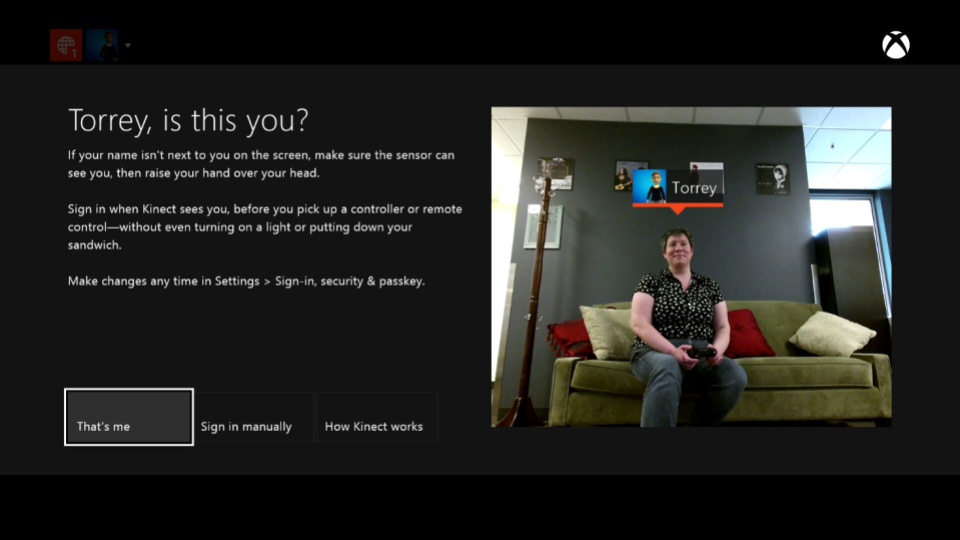
Now, let’s be clear: nobody turns on their Xbox so that they can go check their settings. These technical areas were not interesting because they were fun, but because they were important to get right. They involve people’s money, their agency, their identity and self-expression.
On the console team, we didn’t make the games. Our job was to keep them playing whichever games, movies, TV, and music they wanted. Playing is a human need; we all need play.
When we didn’t do our jobs well, our customers couldn’t play. Maybe it was because they didn’t understand how Xbox would handle their money (or Points). Or maybe they couldn’t get Xbox to represent their identity. Or maybe they just couldn’t figure out how to access their games.
These are all UX problems, and frequently problems with the UX content (my specialty).
When the customers can’t play, for whatever reason, the business suffers. People complain publicly, affecting the brand. People call Support, costing huge expenses for the business (especially when Support can’t fix it)! Most importantly, they stop trusting the brand, and find other ways to play.
In my first UX job, my purpose was crystal clear: the work I did helped people play.
As my career expanded, my purpose broadened: As a UX writer and manager, my work was to help people meet their goals by using the organization’s product, which would also help meet business goals. I wrote Strategic Writing for UX to share what I had learned about driving the business forward by designing UX content to meet user needs. My work has eased the experiences of literally billions of users while making money and saving money for every employer and client I’ve worked with.
And yet, somehow, here we are in this wave of AI-generated interfaces and content. With more people making products, there are even more people who think that UX design (or product design, or whatever) is only there as shiny marketing to be applied at the end, after the product is built.
Product design and tech companies have pushed UX pros almost into obsolescence by insisting that our value is in the artifacts we create: the flows, strings, reports, and more. But it never has been! The value is in the decisions those artifacts record—the strategy that led us to create those artifacts, the alignment they helped us create among our teams, and the hypotheses they allowed us to test.
In this phase of my career, working as an independent consultant, I have a new purpose:
I help creators build successful businesses
by making experiences people love
because every great product or service organization
is built on strategic UX decisions.
How and when to make those strategic UX decisions is what I write about here and in my Chirp newsletter. If it’s something I can help you with, please get in touch.